Games to Improve Focus and Concentration for Students
Contents
- What "focus" really means when you play
- What makes a game good for focus training
- Games to improve focus and concentration for students: the main types
- Quick comparison table
- Why a snake io game is an easy place to start
- A simple 10-minute routine between study blocks
- Mistakes that turn practice into procrastination
- Playing with classmates without losing the hour
- Final thoughts
If you want games to improve focus and concentration for students, the honest answer is that no game turns into instant study power — but some games do give your brain regular practice at holding attention and choosing fast under light pressure. The best ones are short, easy to start, and demand a decision every few seconds instead of long passive stretches. Below you'll find what to look for, a simple comparison of game types, and a 10-minute routine you can use between study blocks.
What "focus" really means when you play
Beginners often treat focus as one single thing. In practice, a game asks you for a few different skills at once:
- Sustained attention — staying with one task for several minutes without drifting off.
- Selective attention — ignoring things that don't matter (a flashing corner of the screen) and tracking what does.
- Divided attention — watching two things at the same time, like your own position and a rival approaching from the side.
- Fast decisions — committing to a choice before the perfect answer is available, then living with it.
That last one matters more than students expect. Exams, presentations and timed problem sets all punish hesitation. A game that forces small, low-stakes decisions every few seconds is a safe place to practise not freezing.
What makes a game good for focus training
Not every game helps. Some are just time sinks dressed up as "brain training". Use this checklist before you commit:
- A round ends in minutes, not hours. You should be able to stop cleanly after one match.
- It starts in seconds. No installs, no long tutorials, no account walls — otherwise the break eats your study time.
- It gives instant feedback. You should see right away whether a decision was good or bad.
- Difficulty adapts. If you always win, attention drops; if you always lose, you quit.
- It is quiet enough to stop. Games with endless timers, streak punishments or daily energy systems pull you back in.
- It doesn't bury you in ads. Pop-ups break concentration — the opposite of the point. Our guide on spotting a clean, ad-light site explains what to check.
If a game fails points 1 and 6, it's entertainment, not practice. That's fine — just don't play it ten minutes before a revision session.
Games to improve focus and concentration for students: the main types
Here are the categories that actually earn their place, with what each one trains.
1. Snake and io games (reaction + spatial awareness)
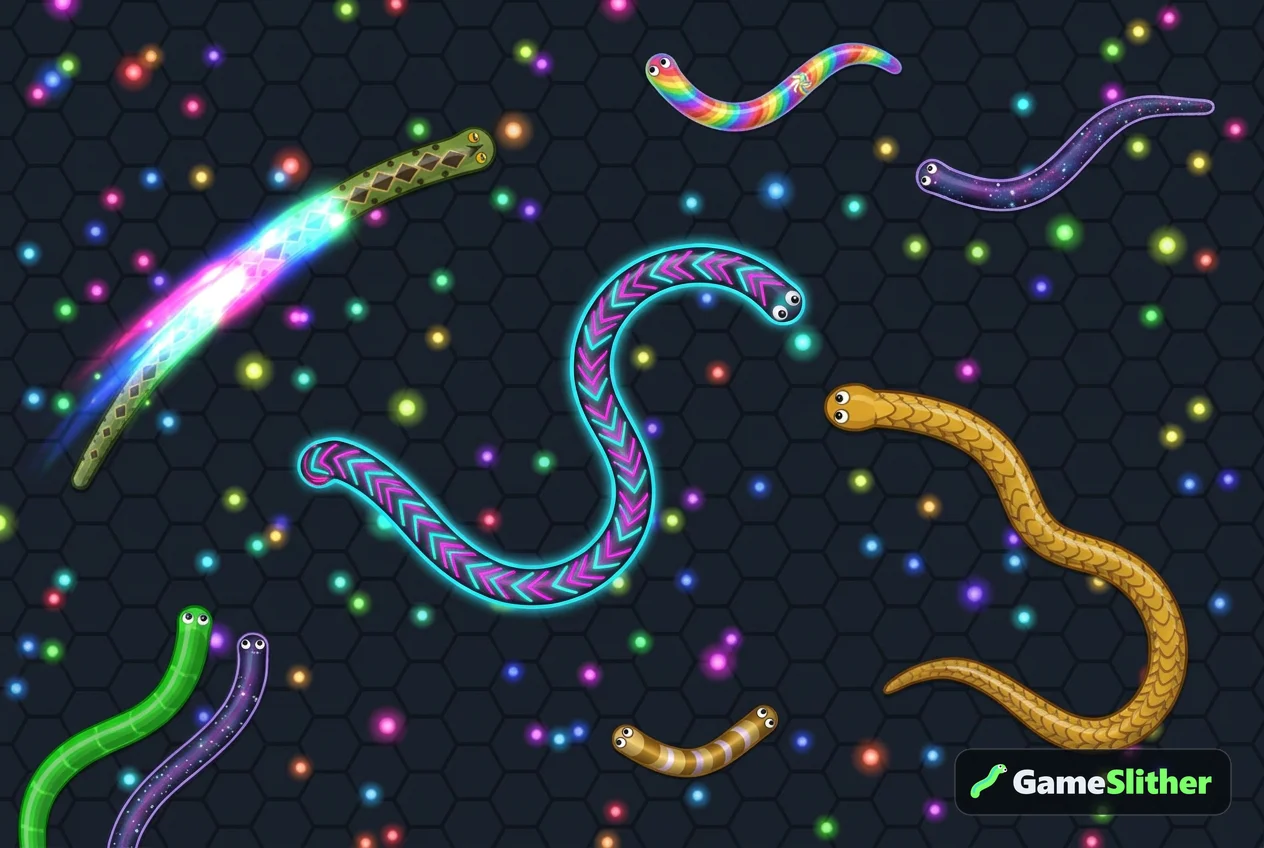
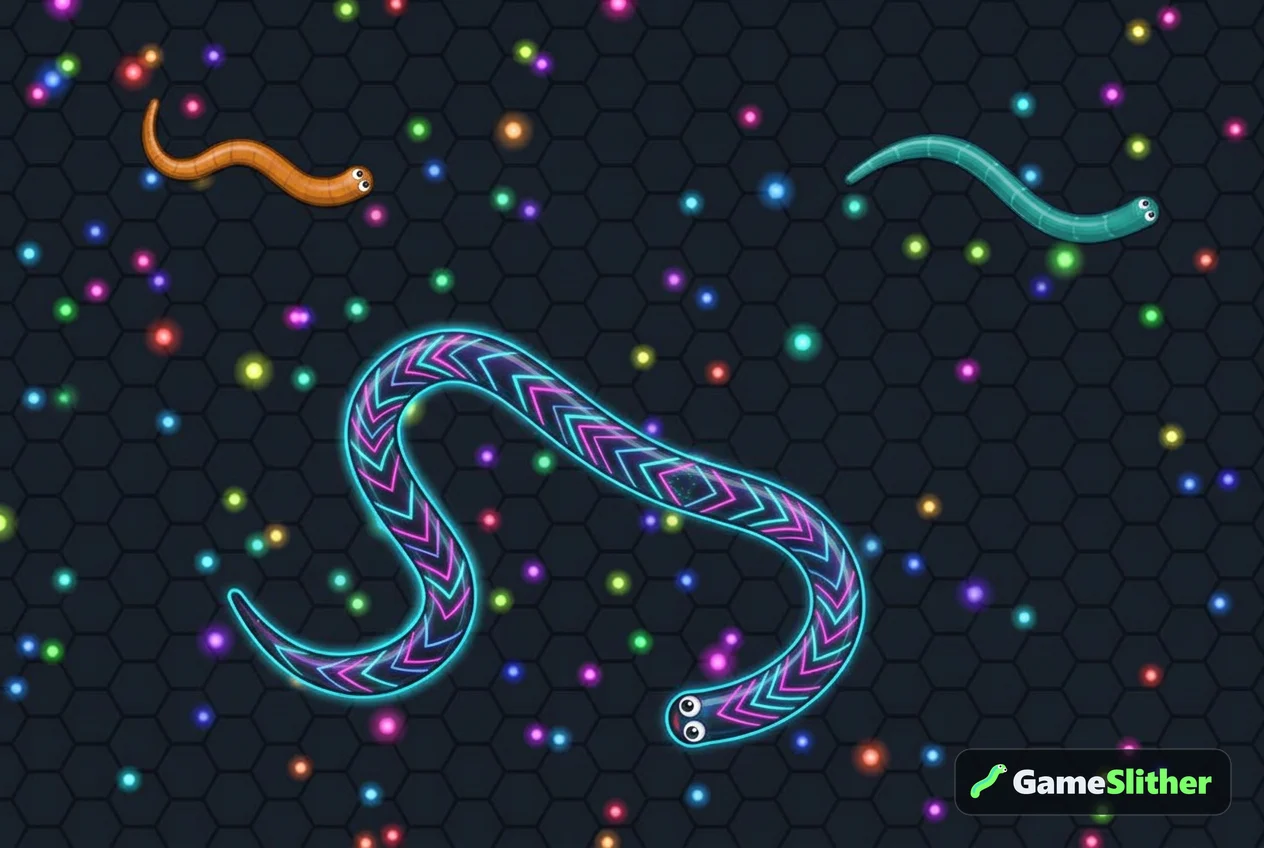
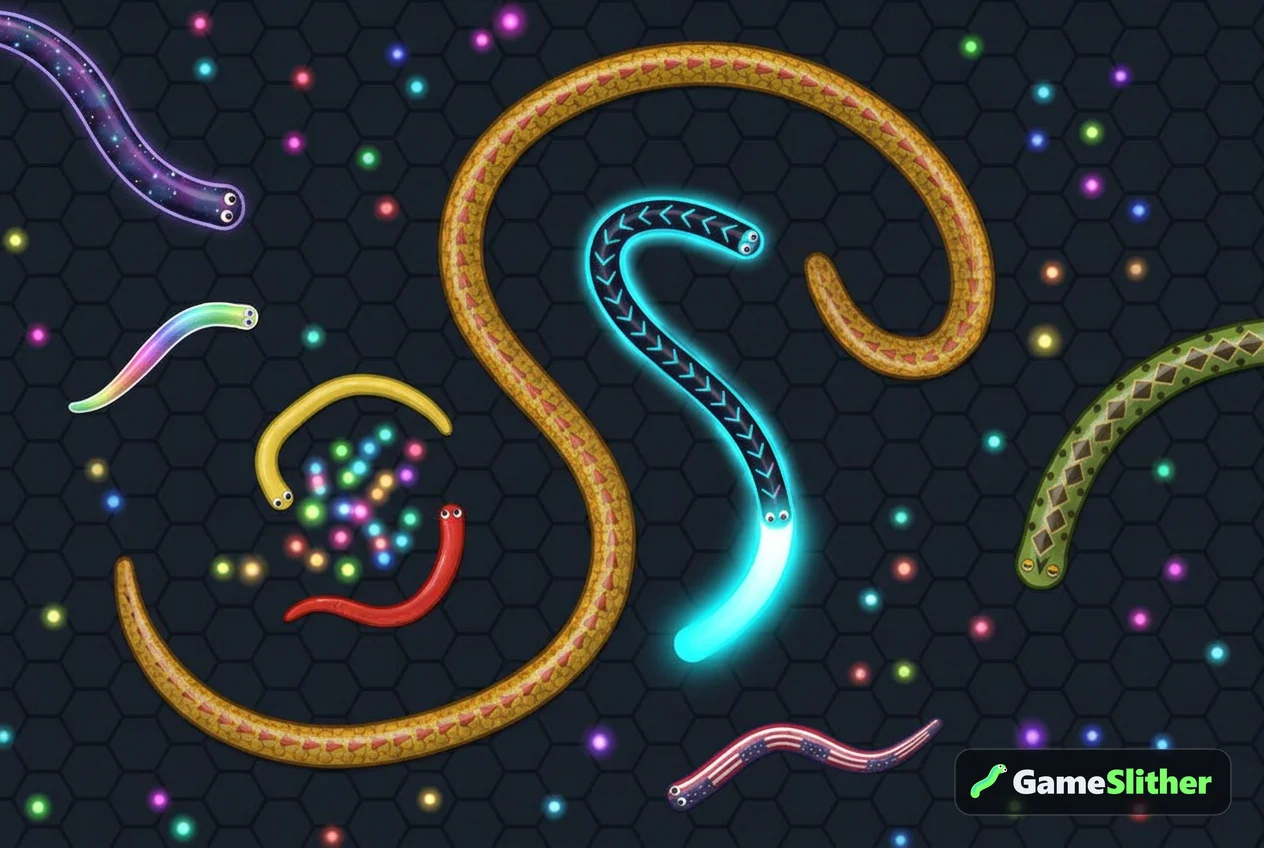
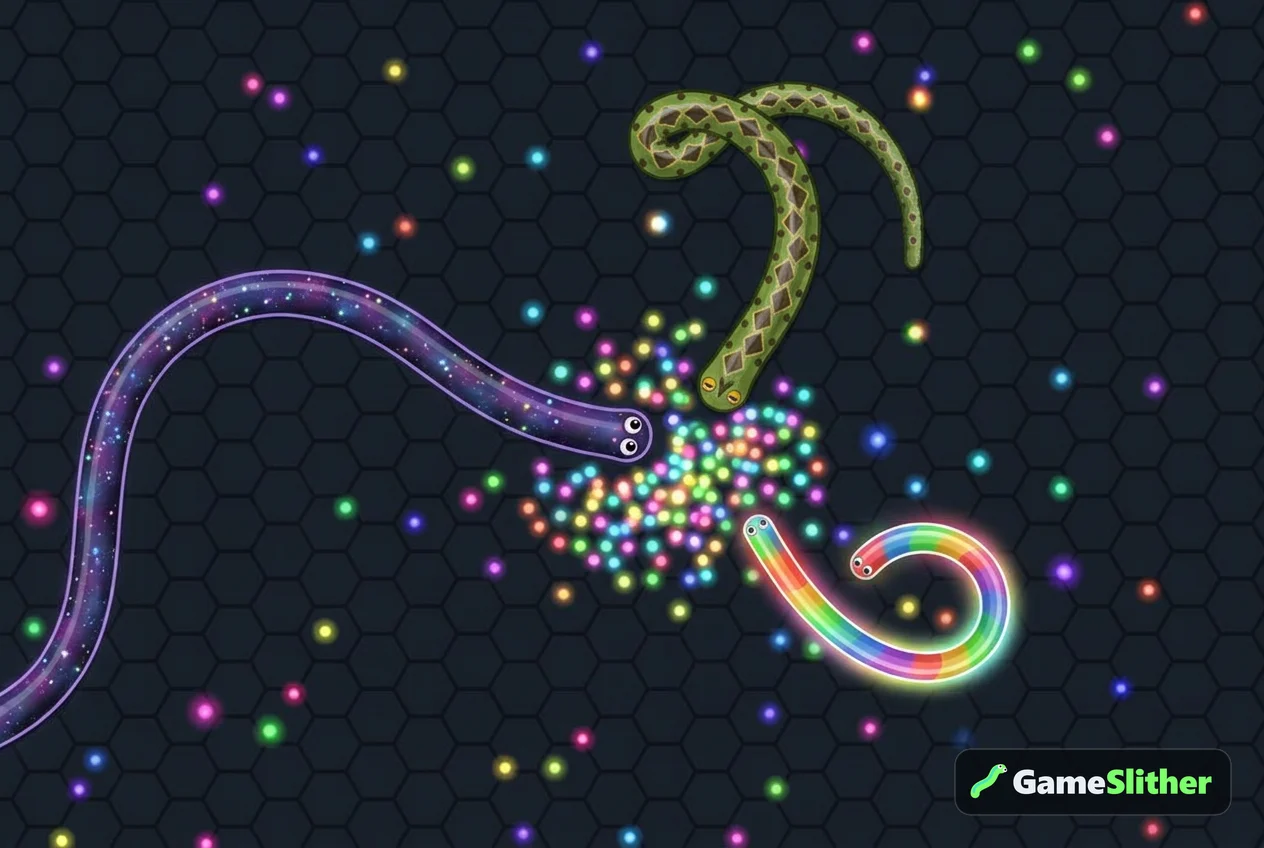
You steer one shape through a crowded arena, tracking several moving rivals at once. Rounds are short, decisions are constant, and the penalty for drifting off is immediate. This is the closest thing to a divided-attention drill that still feels like fun.
2. Reaction and aim trainers
Click a target the moment it appears. Very pure, very boring after five minutes — but excellent for measuring whether you are alert or already tired.
3. Memory and matching games
Flip cards, remember positions, rebuild sequences. These train working memory, which is the part of attention you use when holding a formula in your head while writing the next line.
4. Logic puzzles (sudoku, nonograms, light chess puzzles)
Slow, deliberate thinking. Good for warming up before deep study, less useful for speed.
5. Typing games
Underfeated by students. Faster, more accurate typing removes friction from note-taking, which indirectly protects focus during lectures.
6. Rhythm games
Timing under a steady beat. Strong for sustained attention, but they can be loud and hard to stop mid-song.
Quick comparison table
| Game type | Mainly trains | Typical round | Easy to stop? | Best used |
|---|---|---|---|---|
| Snake / io games | Divided attention, fast decisions | 2–10 minutes | Yes — a round ends when you die | Between study blocks |
| Reaction trainers | Alertness, raw reaction speed | 1–2 minutes | Yes | Quick self-check before studying |
| Memory / matching | Working memory | 3–5 minutes | Yes | Short morning warm-up |
| Logic puzzles | Deliberate reasoning | 5–20 minutes | Sometimes | Before deep-focus work |
| Typing games | Accuracy, motor automation | 1–5 minutes | Yes | Daily, small doses |
| Rhythm games | Sustained attention, timing | 2–4 minutes | Harder — songs pull you on | Weekends, not mid-revision |
There is no "best" row. The right pick is the one you can open, play and close without negotiating with yourself.
Why a snake io game is an easy place to start
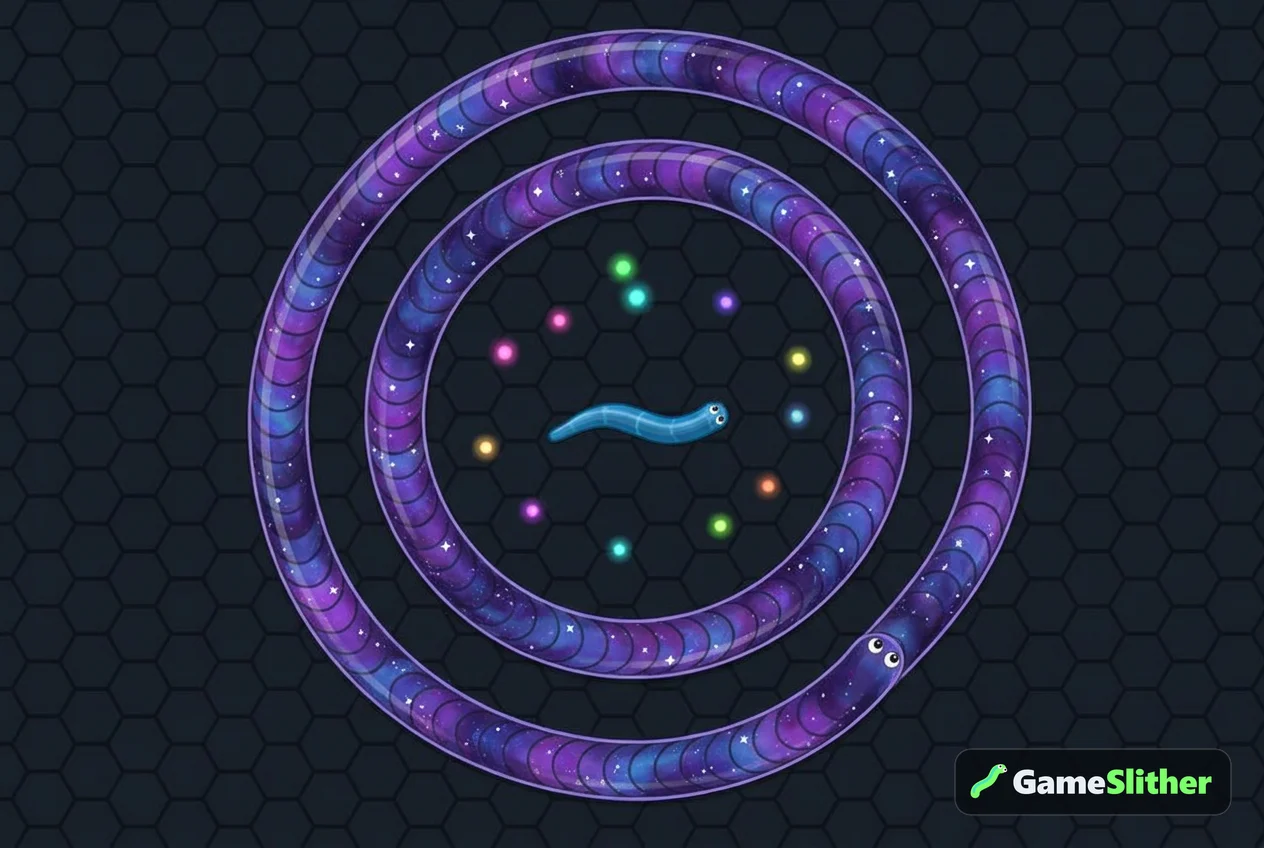
If you've never used games this way, start with something that needs zero setup. GameSlither is a free browser snake game in the Slither.io style: you move with the mouse or your finger, eat glowing pellets to grow, and try to make rivals crash into your body. No download, no sign-up, and it runs on desktop, mobile and tablet.
What makes it useful as a focus drill:
- Constant small decisions. Boost (hold left click, Space or the ⚡ button) and you move faster but lose length and leave pellets behind you. Every boost is a real trade-off, decided in under a second.
- A busy but readable arena. Public rooms always hold around 40 snakes — real players plus AI snakes that step aside as more humans join, up to 50 players per room. You learn to scan rather than stare.
- Three AI behaviours to read. Shy snakes avoid bigger ones, hunters try to cut off smaller snakes, and gluttons rush straight at the pellets a defeated snake left behind. Recognising which one is heading your way is pattern recognition practice.
- Clear feedback. The minimap, live leaderboard and kill feed tell you what just happened, and the result screen after each death shows max length, kills, time alive, best rank and coins earned.
- A natural stopping point. Death ends the round. That's your cue to go back to work.
If you're completely new, read the short how to play section first, then play one slow round where your only goal is survival. Avoiding the usual beginner mistakes matters more than chasing the leaderboard.
A simple 10-minute routine between study blocks
This is the part most "brain game" advice skips. A game helps your focus only if it sits inside a structure. Try this:
- Study for 25–45 minutes on one task, phone face down.
- Stand up and stretch for one minute before touching any screen.
- Play one round, two at most. In GameSlither a careful round often runs several minutes; one is usually enough.
- Read your result screen for ten seconds. Max length, time alive, best rank — a tiny reflection habit.
- Close the tab and drink some water.
- Restart the next study block immediately, before you check messages.
Two rules keep this honest. First, set the break length before you start playing, not after. Second, if you catch yourself opening a third round, stop for the day — that's your brain asking for rest, not practice. For more on why these games are so easy to over-play, see why snake games are so addictive.
Mistakes that turn practice into procrastination
- Playing before studying, not after. A "warm-up" round easily becomes forty minutes. Use games as a reward, not an entry ritual.
- Picking games with long sessions. Anything that takes 30 minutes per match is a hobby, not a study break.
- Chasing rewards instead of attention. Daily missions, login streaks and coin targets are fun, but if you're grinding for cosmetics you've stopped training anything. Treat extras like snake skins as a bonus you pass on the way.
- Playing when already exhausted. Reaction games at 1 a.m. measure tiredness; they don't fix it.
- Believing the game replaces study. It doesn't. It keeps you alert between sessions, and that's a real but modest benefit.
Playing with classmates without losing the hour
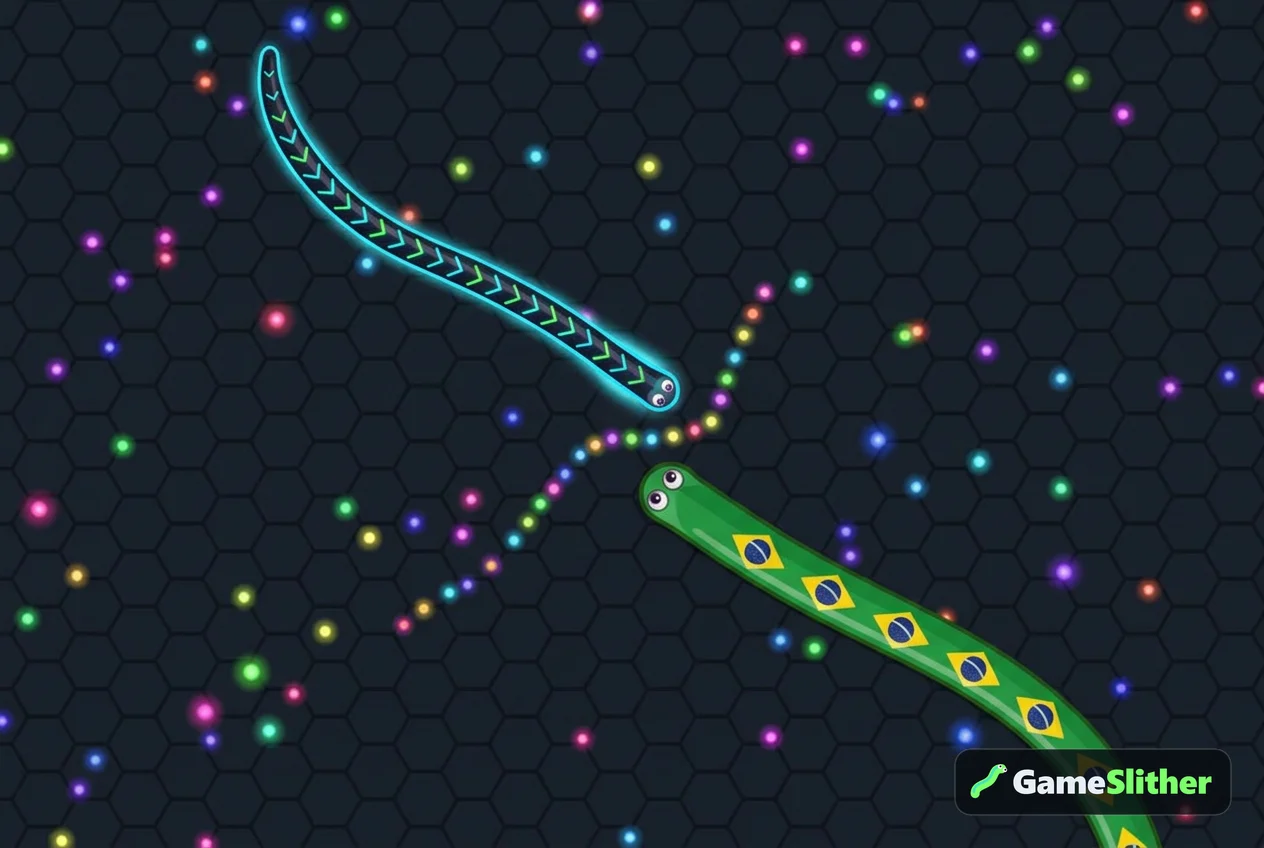
Social play is motivating, but it's also where time disappears. A tidy approach: agree a fixed number of rounds in advance. In GameSlither you can create a private room and share its 4-character code or an invite link, so a study group can meet, play three rounds and leave. Compare your result screens, then get back to the material — our room-code games guide has more ideas for keeping short sessions short.
Final thoughts
The best games to improve focus and concentration for students are short, instantly available, demanding in the moment and easy to walk away from. Use them as punctuation between study blocks, not as the main text. If you want a free, no-download option to test today, open GameSlither, play one round with your full attention on the arena, read your result screen — and then go finish that chapter.
Frequently asked questions
Can games really improve focus and concentration for students?
Games can give you regular practice at holding attention and deciding quickly, and a short round can help you reset between study blocks. They are not a replacement for studying, sleep or breaks away from screens.
How long should a study-break game session be?
Aim for 5–10 minutes, which is usually one or two rounds. Decide the limit before you start playing and close the tab as soon as the round ends.
Is a snake io game good for training fast decisions?
Yes, because you make small choices constantly — when to turn, when to boost and when to back off from a bigger snake. In GameSlither boosting costs length, so every decision has an immediate, visible trade-off.
Do I need to download or sign up to play these games?
Not for browser games. GameSlither runs in the browser on desktop, mobile and tablet with no download and no sign-up, so a break never turns into an installation project.
Should I play before or after studying?
After. A short round works well as a reward at the end of a study block, while playing first often stretches into a much longer session before you've started any real work.