Why Are Snake Games So Addictive? The Psychology
Contents
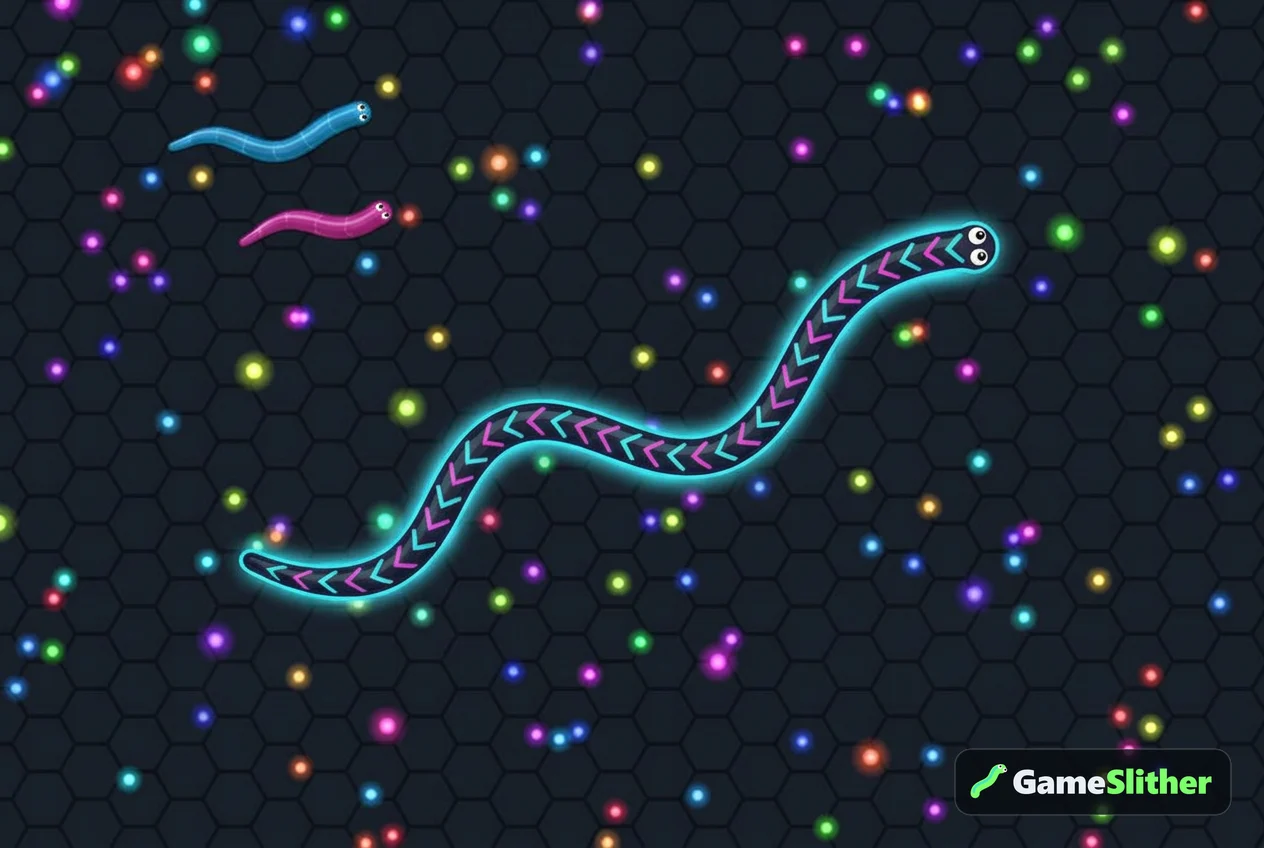
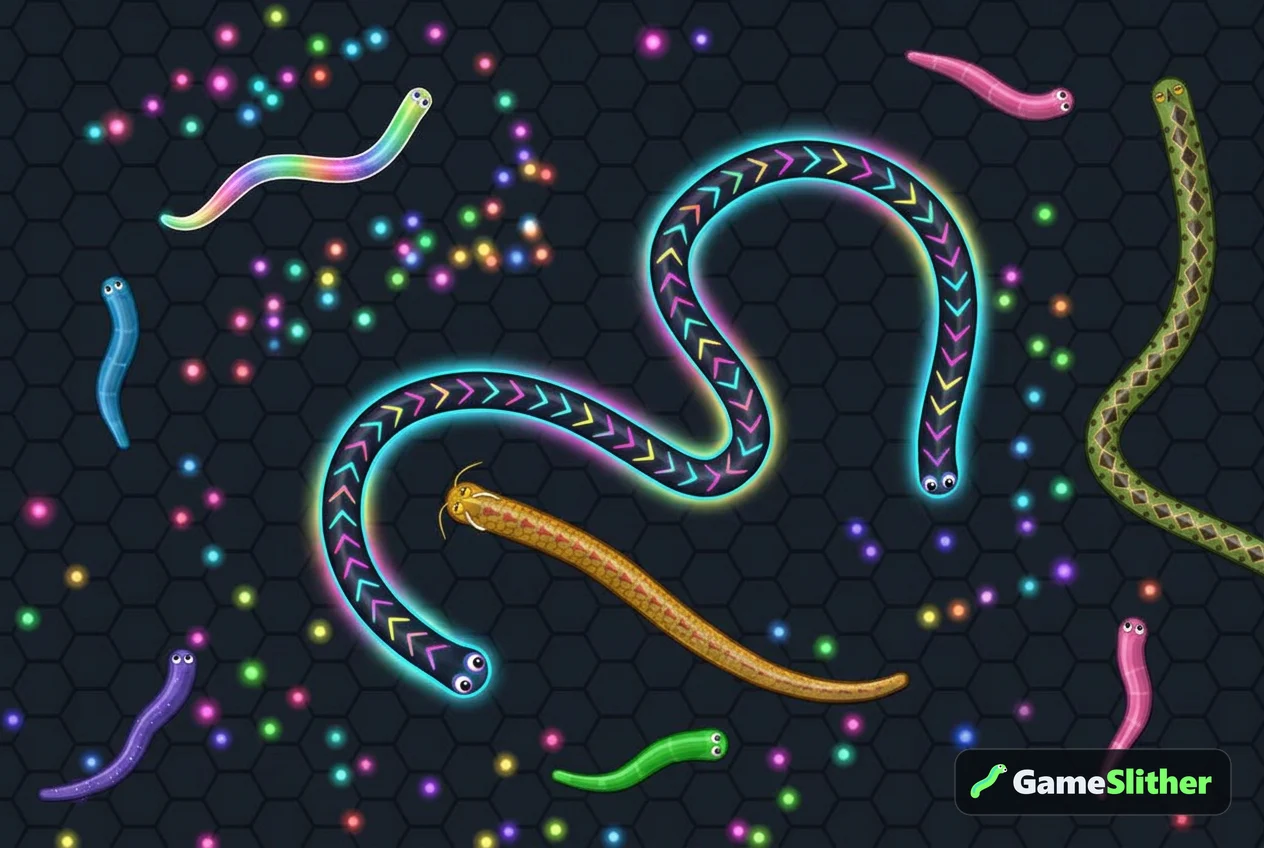
If you have ever told yourself "just one more round" at 11pm and still been playing at midnight, you are not weak-willed — you are reacting exactly the way the game design expects. Why are snake games so addictive comes down to four plain ingredients: rounds that end fast, progress you can literally see growing on screen, deaths that feel like almost wins, and small rewards that arrive on a predictable schedule. Below I unpack each one in beginner-friendly language, with examples from GameSlither, a free browser snake game in the Slither.io style.
The short answer: a very fast loop
A "loop" just means the cycle you repeat: start → play → end → start again. In most games that loop takes 20 minutes or an hour. In a snake game it can take 90 seconds.
That speed matters more than you might think. When restarting is free and instant, your brain never gets a natural stopping point. There is no save file to load, no lobby to wait in, no download. You die, you see your score, you press play, you are back in. The decision to stop has to be made actively — and that is much harder than simply letting a session end.
Growth you can see: the bar in your head
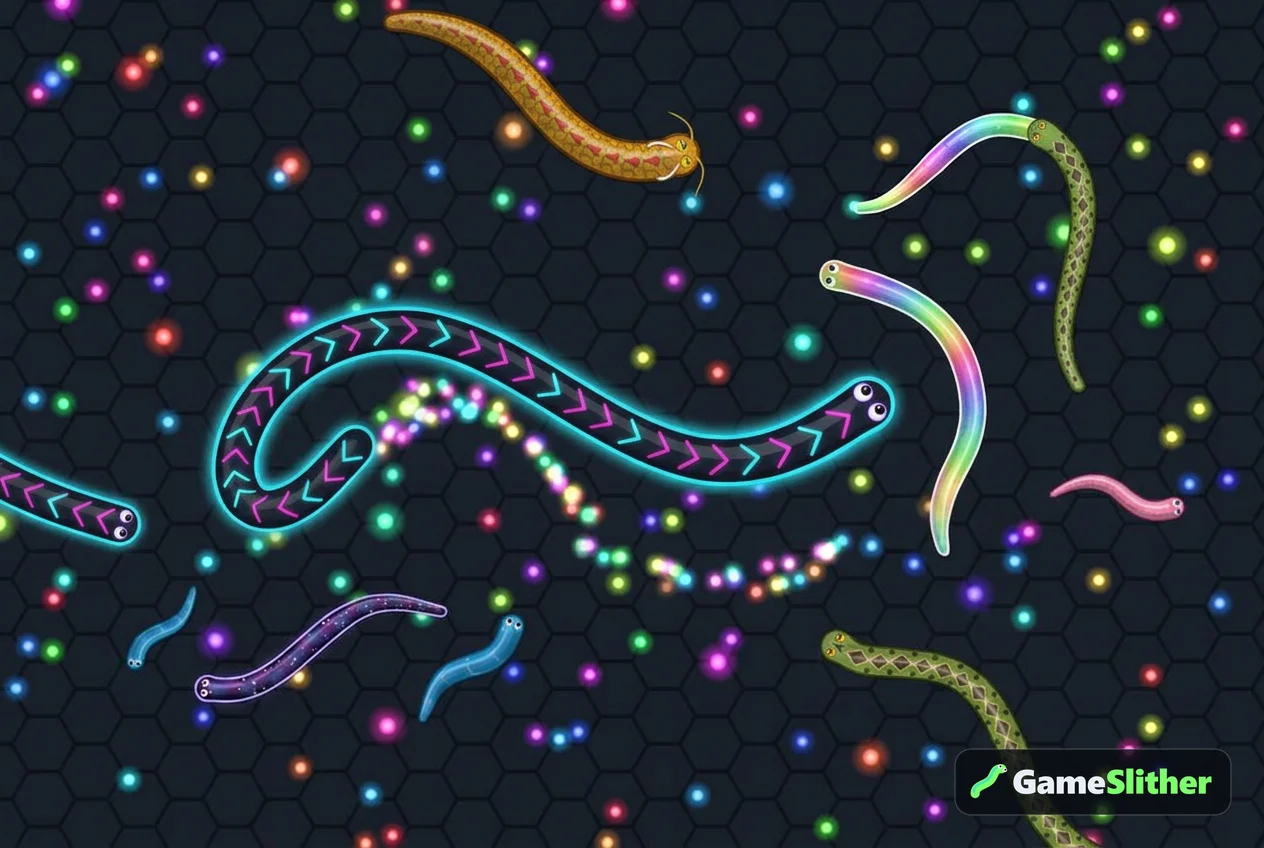
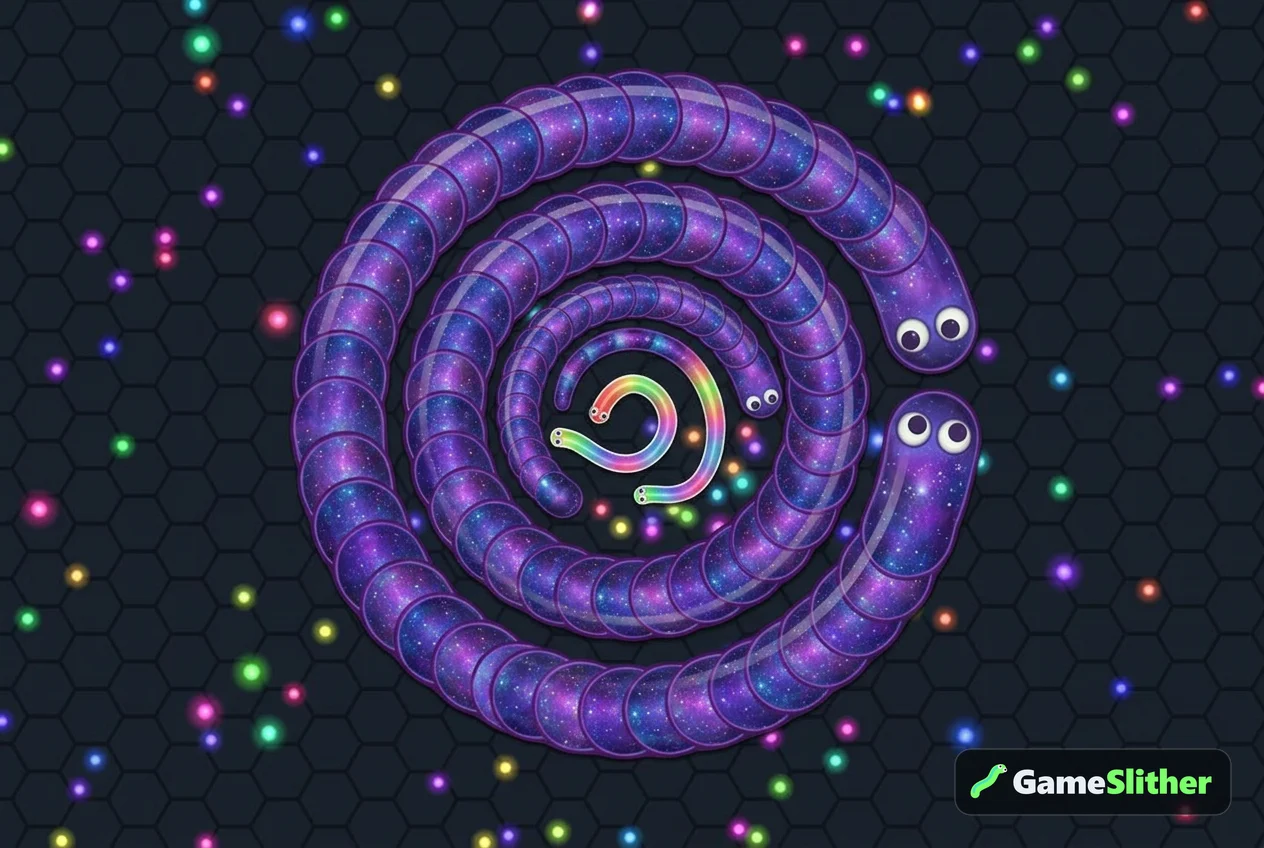
Humans are very motivated by visible progress. A snake game makes progress impossible to miss: your snake gets physically longer with every pellet. You do not have to read a number to know you are doing well — you can see your body stretching across the screen.
This creates three small psychological pulls at once:
- A moving goal. At length 200 you want 400. At 400 you want 1,000. The target always sits just above where you are.
- Loss aversion. Once you are long, dying feels like losing something you built, not just failing a level. That sting pushes you straight back in to "get it back".
- Sunk effort. After six minutes of careful play you are far less willing to log off than after six seconds.
If you want a realistic sense of the climb, our guide on how long it takes to reach 1,000 length breaks the pacing down.
Near misses are the strongest hook of all
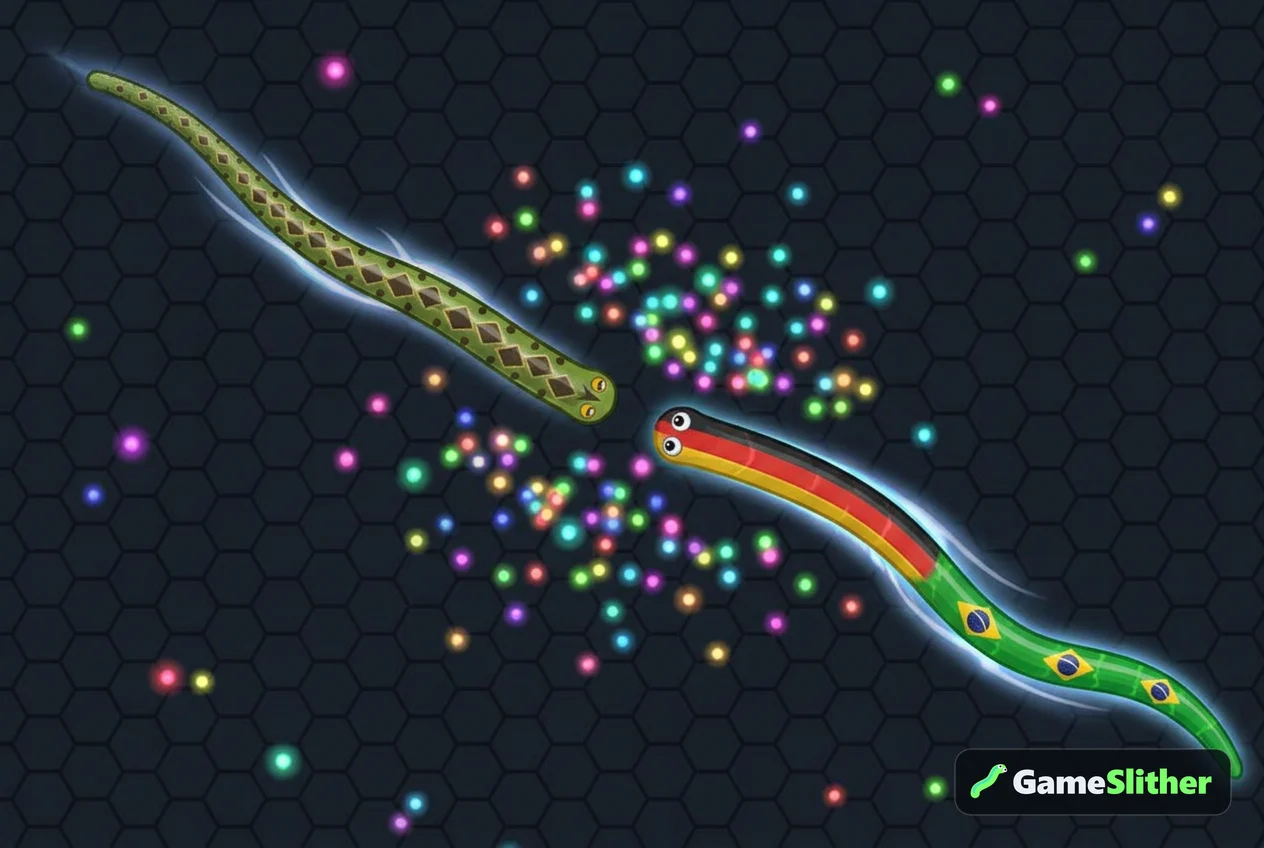
This is the big one. In a snake game, almost every death is a near miss — you were one small turn away from surviving, or one body length away from a kill.
That feeling is very different from being clearly outplayed. A near miss tells your brain "the skill is already there, the outcome was random noise", which is a powerful invitation to try again immediately. Snake games are full of these moments because the rules are so thin: you only lose when your head touches another snake's body. One flick of the mouse separates a 2,000-length run from the result screen.
The kill feed and the result screen sharpen it further. Seeing your max length, kills, time alive and best rank turns a vague "that went badly" into a precise, beatable number.
Small rewards on a schedule
The last ingredient is reward timing. Psychologists call frequent, slightly unpredictable rewards the most engaging kind — and snake games are built from them.
| Hook | What it looks like in GameSlither | Why it works |
|---|---|---|
| Micro-rewards | +1 coin per 10 length, +5 coins per snake defeated | Payoff arrives constantly, not at the end |
| Daily tasks | 3 new daily missions that pay coins instantly | Gives you a reason to return tomorrow |
| Streaks | Login reward climbing from 20 to 200 coins over 7 days | Breaking a streak feels like a loss |
| Collection | 6 free skins, 23 flag skins, 4 achievement-only skins | Visible gaps you want to fill |
| Social proof | Live leaderboard, weekly and all-time hall of fame | Your effort is witnessed and ranked |
None of this is sinister — it is the same structure as a board game that lets you roll again. But knowing the mechanism makes it much easier to decide when you are done.
Why multiplayer makes it stickier
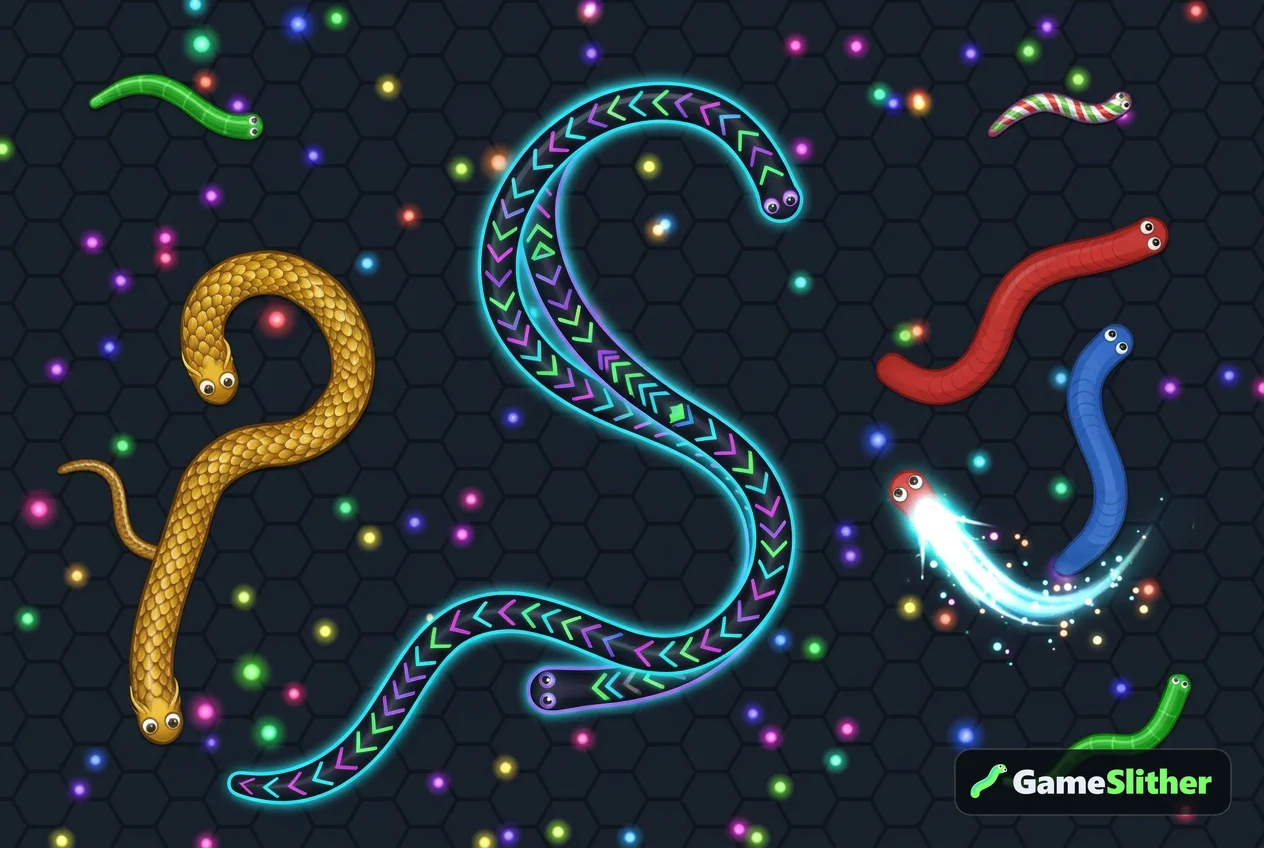
Playing against people (and against AI snakes that behave like people) adds unpredictability. In GameSlither's public rooms there are around 40 snakes at a time, and the AI ones come in three flavours: shy snakes that flee bigger players, hunters that try to cut you off, and gluttons that dive for the pellets a dead snake leaves behind.
Because you can never fully predict them, no two runs feel identical. Repetition without sameness is exactly the combination that keeps attention. If you are curious which opponents are human, see bots vs real players.
Playing on purpose instead of on autopilot
You do not need to quit — you just need a stopping rule. A few that work:
- Decide the exit before you start. "Three runs" or "until my missions are done" beats "until I feel like stopping".
- Finish on a win. Ending after a good run removes the near-miss itch.
- Use a timer. A 20-minute alarm is a neutral referee.
- Set a skill goal, not a time goal. Aim for a length or a clean encirclement, then log off.
- Play with friends in a private room. A shared session has a natural end.
Conclusion
So, why are snake games so addictive? Fast loops, visible growth, constant near misses and steady little rewards — four simple mechanisms stacked on top of controls anyone can learn in ten seconds. Understanding them turns a compulsion into a choice, and honestly makes the game more fun to play well. If you want to watch the psychology at work from the inside, read the quick how to play rundown, pick a snake skin you like and start a free round on GameSlither — no download, no sign-up.
Frequently asked questions
Why do I keep wanting to play one more round of a snake game?
Because rounds are short and restarting is instant, your brain never reaches a natural stopping point. Add near-miss deaths and visible length growth, and "play again" feels like the obvious next step.
Are snake games bad for you?
Not inherently — they are short, low-pressure games that can sharpen reaction time and hand-eye coordination. Problems only appear when sessions stretch past what you intended, which a simple timer or run limit fixes.
Why does dying in a snake game feel so frustrating?
Most deaths are near misses: one small turn away from surviving. That makes the loss feel random rather than deserved, which is a strong push to try again immediately.
Do daily missions and coins make the game more addictive?
They add a reason to come back tomorrow, yes. In GameSlither coins have no money value and only unlock cosmetic skins, so you can ignore them entirely and still play every feature of the game.
How can I stop playing without quitting the game completely?
Decide your exit point before you start — three runs, 20 minutes, or until your daily missions are finished — and try to end on a good run rather than after a frustrating death.