How to Get Better at Snake Games: 7-Day Practice Plan
Contents
- What "getting better" actually means in a snake game
- Before day 1: a ten-minute setup
- The 7-day plan at a glance
- Days 1–3: control, awareness and patience
- Days 4–5: food and your first kills
- Days 6–7: playing big and putting it together
- How to tell you are actually improving
- Five habits that quietly undo your practice
- Week two and beyond
If you want to know how to get better at snake games, the honest answer is that it takes about a week of short, focused sessions — not hundreds of hours. Most beginners lose quickly because they try to learn everything at once: steering, boosting, chasing pellets, cutting off rivals and watching the leaderboard. The plan below splits those skills across seven days, with one clear goal per day, so you can practise each one properly in 15–20 minutes.
What "getting better" actually means in a snake game
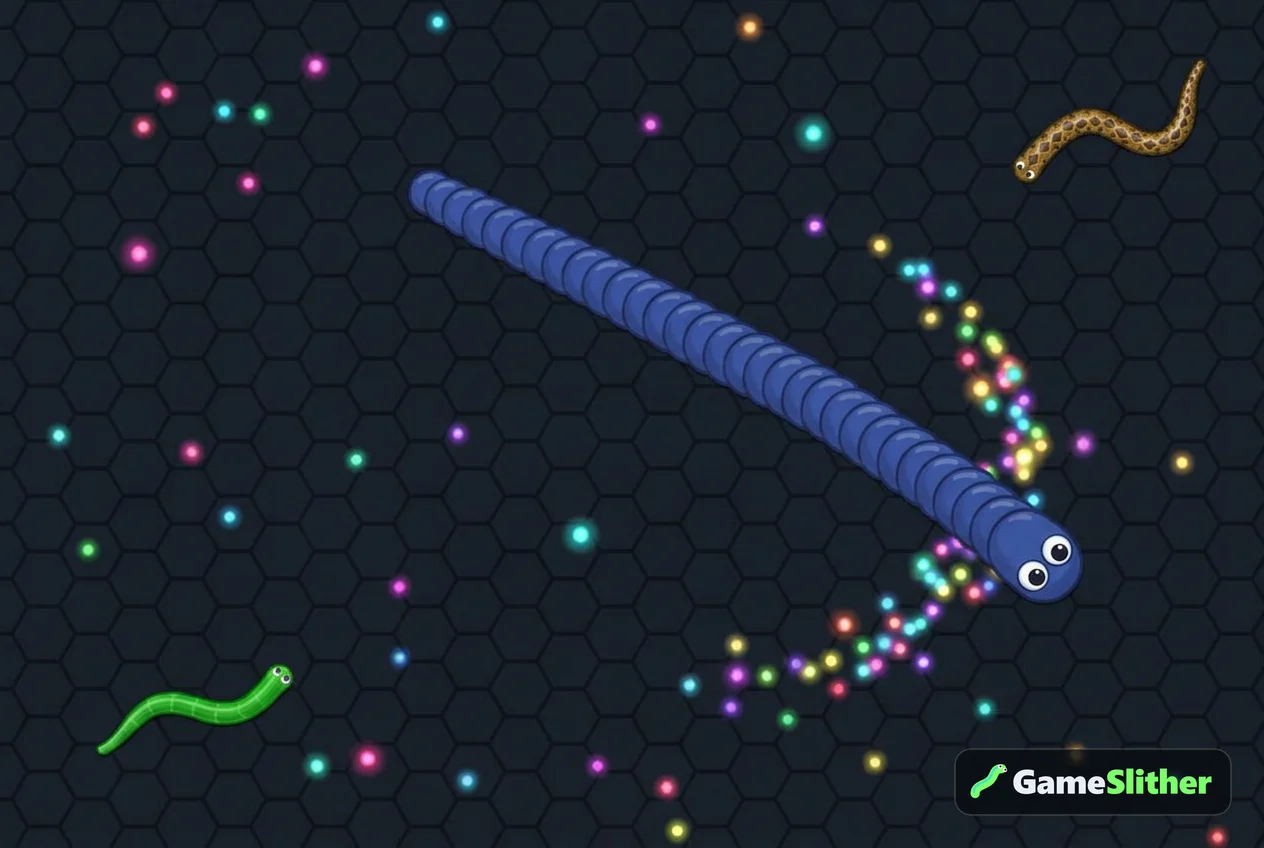
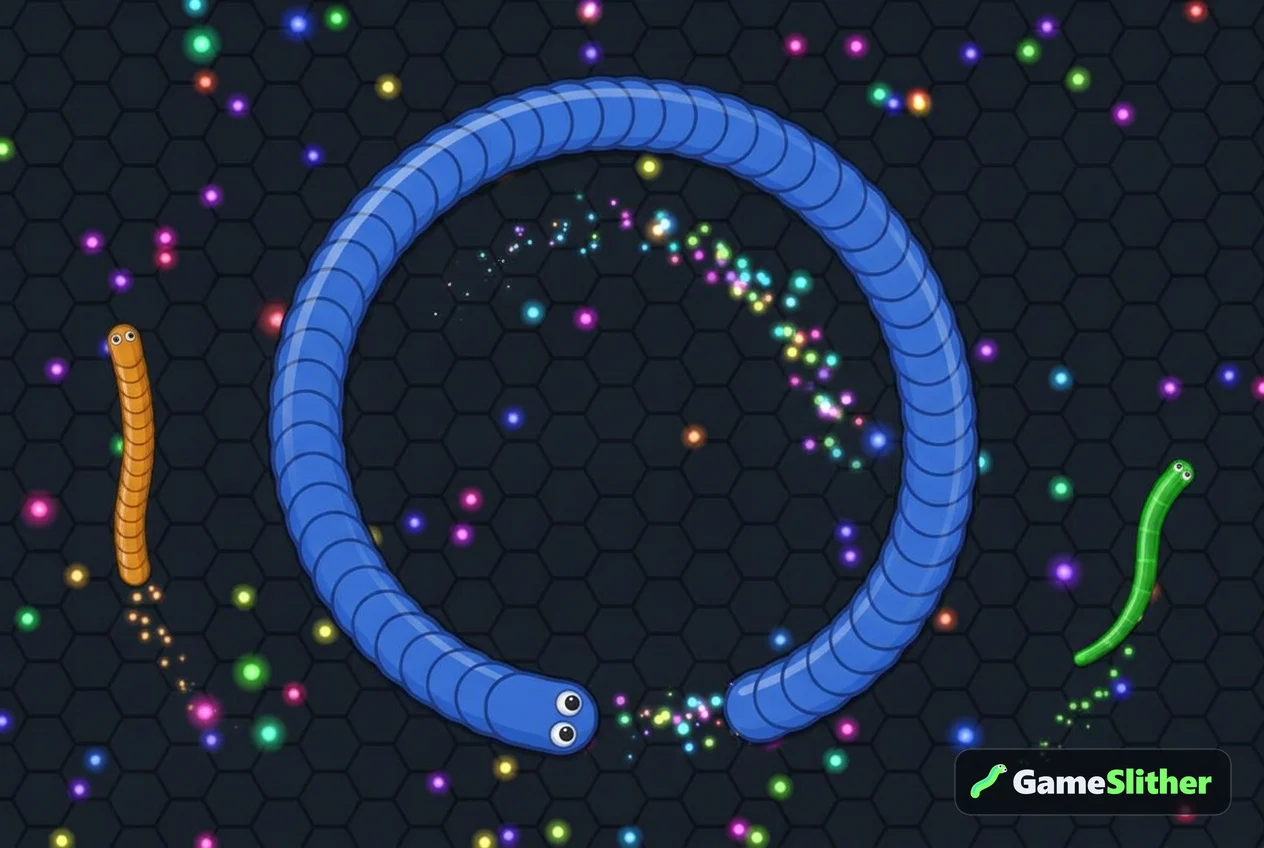
Before you practise anything, it helps to understand exactly what the game is asking you to do. In a Slither.io-style game such as GameSlither, you steer a snake with your mouse or finger, eat glowing pellets to grow longer, and die the moment your head touches another snake's body. Other snakes die the same way — when their head touches your body.
That single rule creates four separate skills:
- Steering — making small, smooth corrections instead of panicked turns.
- Space reading — knowing how much empty room is around you and where it leads.
- Boost control — using your speed burst at the right second, not constantly.
- Decision making — choosing when to fight for a kill and when to quietly leave.
Notice that "being long" is not on the list. Length is a result, not a skill. Long snakes are simply snakes that stayed alive while making reasonable choices. If you want the full rules explained step by step first, read the short how to play guide before day one.
One more thing worth knowing while you practise: a public GameSlither room always holds around 40 snakes — real players plus AI snakes that step aside as more humans join (up to 50 players per room). Those AI snakes come in three personalities: shy ones avoid bigger snakes, hunters try to cut off smaller snakes, and gluttons rush straight at the pellets a defeated snake leaves behind. Learning to recognise those three behaviours is half of your early progress.
Before day 1: a ten-minute setup
A calm setup removes a surprising number of deaths. Spend ten minutes on this once, and every practice session afterwards will be cleaner.
- Pick your input and stick with it. Mouse on a laptop or desktop, thumb or index finger on a phone or tablet. Switching back and forth during the week will slow your learning down.
- Give yourself room. On a desktop, you want enough free mouse-mat space to make a wide circle without lifting your hand. On mobile, hold the device with both hands and steer with the thumb you write with.
- Close heavy browser tabs. Smooth frames matter more than any trick. If the game stutters, your turns arrive late and you crash into things you clearly saw.
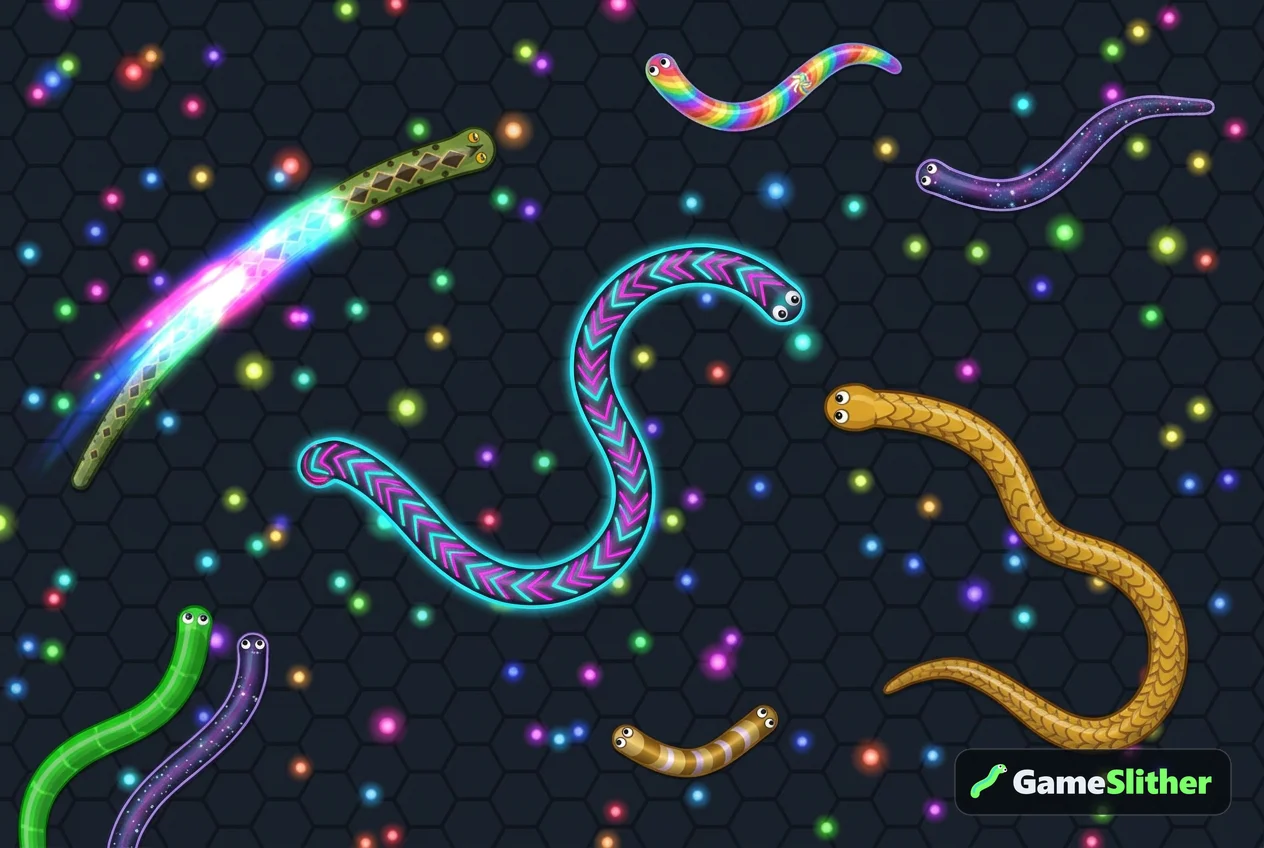
- Choose a colour you can track instantly. The free Classic skin comes in 12 colours; pick one that stands out against the background so your own head is never hard to find. You can look at the other snake skins later — none of them change how the game plays.
- Save your recovery code. It restores your coins and unlocked items on another device or after you clear your browser data. Do it now, not after a good run.
No download and no sign-up are needed, so each practice session starts in seconds. That matters: a plan you can start in ten seconds is a plan you will actually finish.
The 7-day plan at a glance
| Day | Focus | Main drill | Session length |
|---|---|---|---|
| 1 | Steering | Survive 3 minutes without boosting | 15 min |
| 2 | Space reading | Play the quiet zones, check the minimap every few seconds | 15 min |
| 3 | Boost control | Short taps only, never long holds | 15 min |
| 4 | Feeding | Collect pellet piles safely from the outside | 20 min |
| 5 | Cut-offs | Earn your first clean kills on smaller snakes | 20 min |
| 6 | Playing big | Survive at length while turning slowly | 20 min |
| 7 | Full run | One serious attempt at your personal best | 25 min |
Keep the sessions short. Twenty focused minutes beat two distracted hours, because tired players repeat the same mistake instead of noticing it.
Days 1–3: control, awareness and patience
Day 1 — Steering only, no boost at all
Today you are not trying to grow, climb the leaderboard or kill anyone. Your single goal is to stay alive for three minutes in one life without pressing boost once.
How to do it:
- Move your mouse in long, gentle arcs. Tiny wrist movements are enough; the snake follows the cursor, so the cursor should stay close to your snake's head, not at the far edge of the screen.
- When something comes toward you, turn early and wide. Late, sharp turns are the number one beginner killer.
- If you feel trapped, turn toward the biggest empty area, even if there are no pellets there.
Repeat until you hit three minutes twice. Do not worry that your snake is small — small snakes turn fast and survive well, which is exactly what you are training.
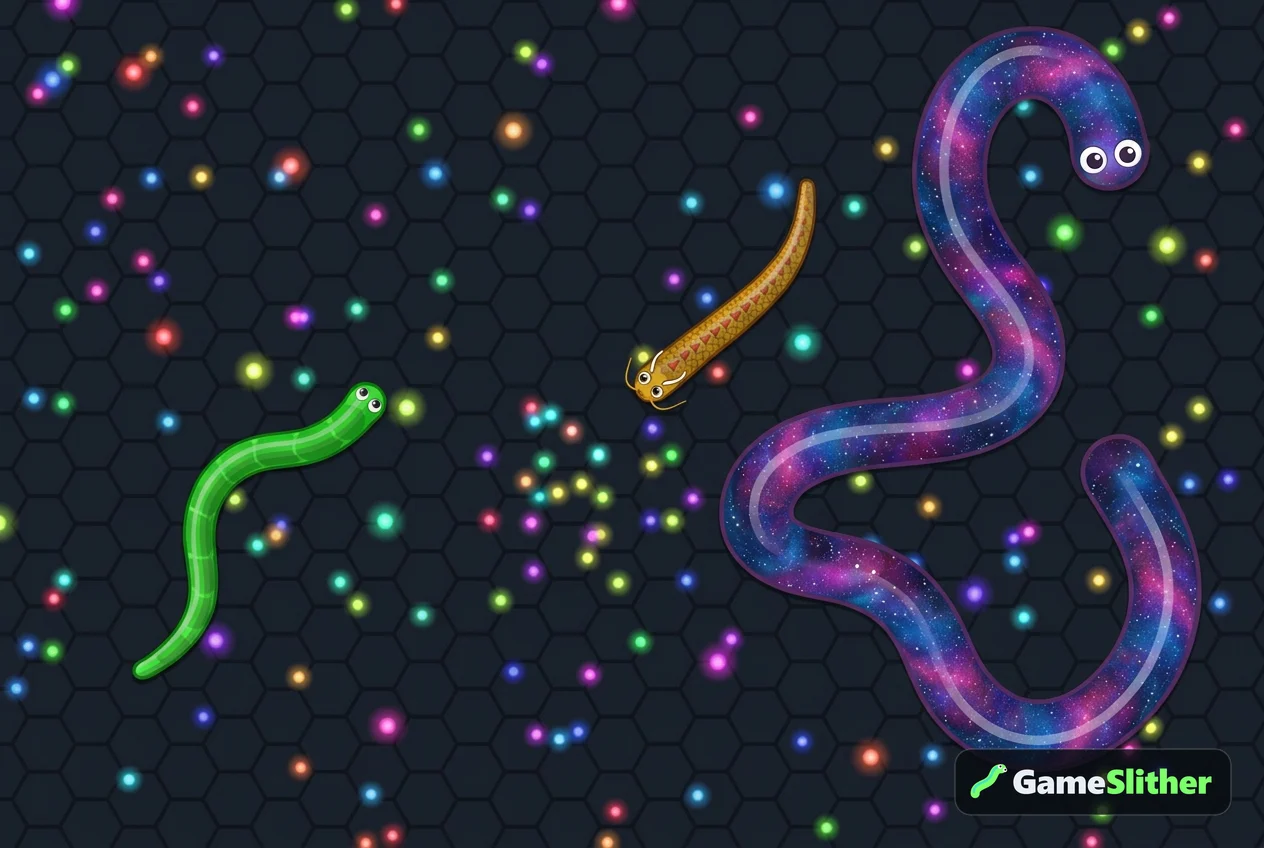
Day 2 — Reading space and using the minimap
Today's goal: spend most of your life in areas where you can see empty ground in at least two directions.
The minimap shows where the crowd is. Every few seconds, glance at it the way a driver glances at a mirror — a quick look, then back to the road. Busy clusters mean more pellets but far more danger; the quieter rings around them are where beginners grow safely.
A simple drill: choose one quiet area and circle inside it for a whole life, eating only what comes to you. It feels slow. It also teaches you what "enough space" looks like, which is the feeling you will rely on for the rest of the week.
While you circle, start naming the AI behaviours out loud: "that one is avoiding me" (shy), "that one is angling at my head" (hunter), "that one ignored me and went for the pellets" (glutton). Naming them forces you to actually look.
Day 3 — Boost control: short taps only
Boost is the button that gives beginners most of their deaths. Holding left click, Space or the ⚡ button makes you faster, but it costs length and drops pellets behind you, which attracts other snakes straight to your position.
Today's rule: no boost longer than about one second.
Practise these three legitimate uses:
- Escape — a short burst to slip past a snake that is closing in.
- Gap closing — a quick tap to reach a pellet pile a moment before a glutton bot does.
- Repositioning — a tap to cross an open lane you do not want to linger in.
Everything else is wasted length. Count your boosts in a single life; if you used more than ten, you are boosting out of nerves, not out of plan. If dying still feels random after this day, the breakdown in why you keep dying in Slither io pairs well with the drill.
Days 4–5: food and your first kills
Day 4 — Feeding efficiently without getting greedy
When a snake dies, it leaves a bright trail of pellets. That pile is the fastest growth in the game and the most common place to die, because every glutton AI and half the human players are heading there too.
Today's goal: collect from three pellet piles and survive all three.
The safe method:
- Approach from the outside edge of the pile, never through the middle.
- Eat along a curve so your head always points at open space.
- Leave when a bigger snake arrives. Half a pile and a live snake beats a full pile and a death screen.
- Keep your tail in mind: in a crowd you can crash into a snake that curls behind you.
Remember that growth also pays you: you earn 1 coin for every 10 length you reach and 5 coins for every snake you take down. Steady feeding quietly funds the coin skins in the shop without you chasing anything risky.
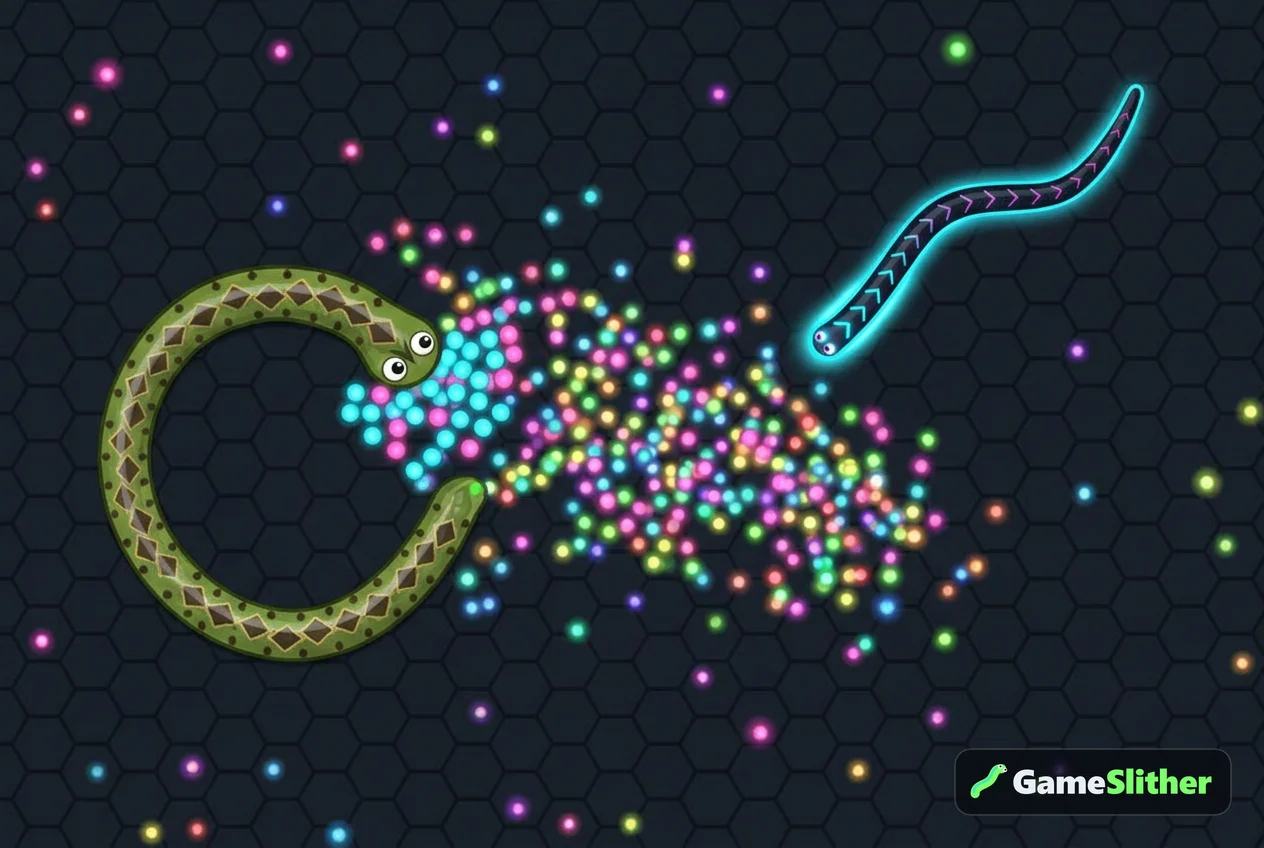
Day 5 — Your first clean cut-offs
Now you can start making other snakes crash. A cut-off means getting your body across the path of a snake's head so it has nowhere safe to turn.
Today's goal: two kills, both against snakes smaller or equal to you.
The beginner-friendly version:
- Pick a target that is moving in a straight line and is not much bigger than you.
- Move diagonally ahead of it — aim at the space in front of its head, not at the head itself.
- Turn across its path while you still have room to continue your own curve.
- If it turns away cleanly, let it go. Do not chase; chasing from behind is how you follow someone into a trap.
Deliberately avoid bigger snakes today. Hunting upward is a separate, much harder skill, and losing a 2,000-length snake to a failed ambush teaches you less than two tidy kills do. If you want more survival angles for this stage, how to survive as a small snake covers the defensive side of the same situations.
Days 6–7: playing big and putting it together
Day 6 — Learning to be the long snake
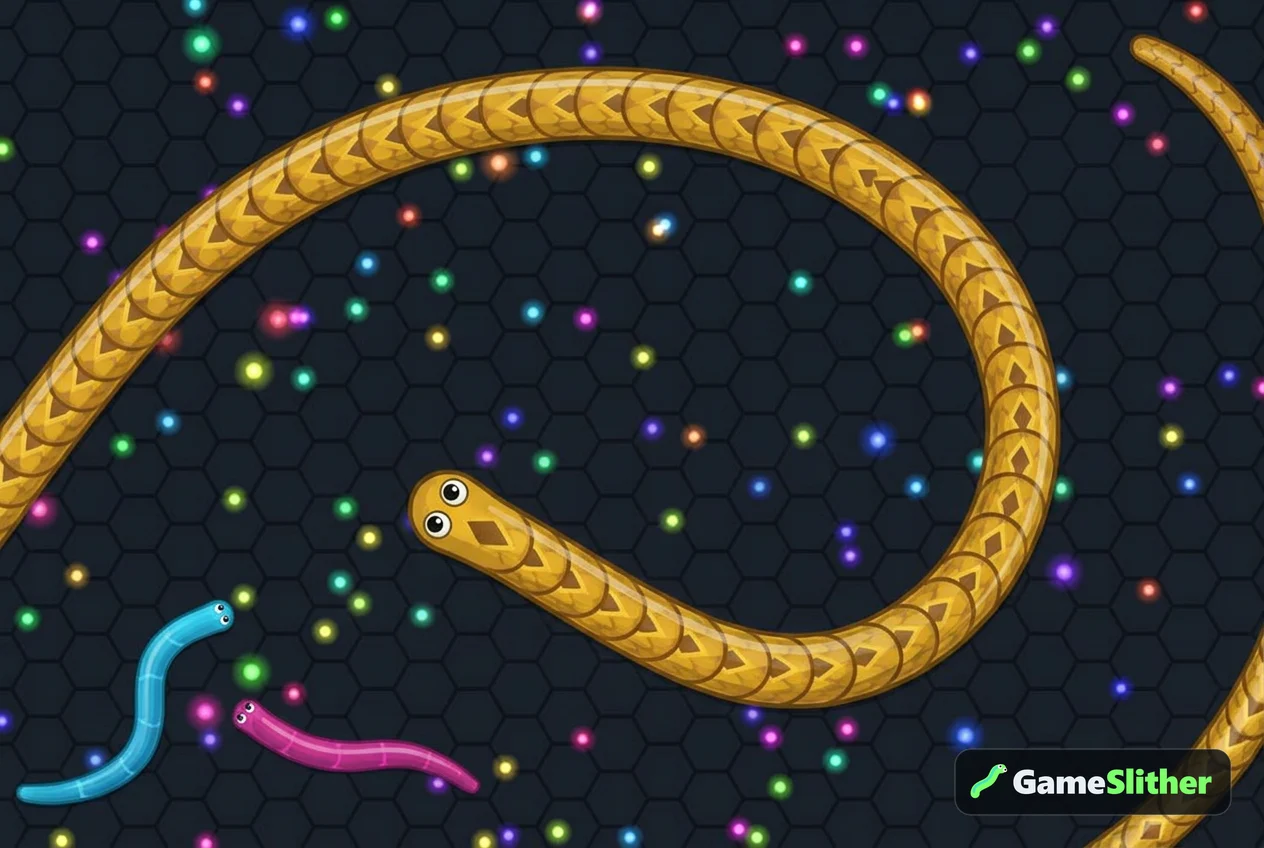
Once you pass a few hundred length, the game changes. Your turning circle is wider, your tail is somewhere off screen, and you become a target for every hunter AI and ambitious player in the room.
Today's goal: reach a length you are proud of, then survive five more minutes without trying to kill anyone.
Habits that keep big snakes alive:
- Turn earlier. A long snake needs roughly twice the warning distance of a short one.
- Use wide circles, not tight loops. Tight loops put your own body on your escape route.
- Let small snakes pass. They are worth a little food and a lot of risk.
- Drift outward when the middle gets crowded. Edges are not safe exactly, but they have fewer surprise angles.
- Treat boost as an emergency tool. You are now shedding real length every time you press it.
Day 7 — One full, serious run
Today you combine everything: smooth steering, quiet zones, short boosts, safe feeding, opportunistic cut-offs and patient big-snake play.
Play three lives, maximum. Before each one, say your plan in a single sentence — for example, "grow to 500 in a quiet area, then only take free kills." After each life, read the result screen properly: it shows your max length, kills, time alive, best rank and coins earned, and a Share button that turns the run into an image.
If your best life of the week is a good one, check whether it lands on the weekly hall of fame (which resets on Monday) or the all-time board. Those boards track the longest snake in one life, which is exactly the thing this week trained.
How to tell you are actually improving
Beginners judge themselves by length alone, which is misleading — one lucky pellet pile can double your size. Use the result screen instead and track three numbers across the week.
| Number | Beginner | Improving | Solid |
|---|---|---|---|
| Time alive (best life) | under 2 minutes | 3–5 minutes | 8 minutes or more |
| Deaths in the first 30 seconds | most games | occasional | rare |
| Kills per session | 0 | 1–3 | several, mostly planned |
Two quieter signs of progress are worth as much as the numbers:
- You can explain why you died, straight away, without replaying it.
- You start leaving fights voluntarily instead of only when you are scared.
Daily missions help here too. You get three new ones each day — play a number of games, defeat a number of snakes, reach a length, survive a number of minutes in one life — and they pay coins instantly. Treating a mission as your session goal keeps practice focused, and the daily login reward (20 coins on day 1, rising to 200 on day 7 of a streak, then repeating) rewards you simply for showing up for the week.
Five habits that quietly undo your practice
- Boost-spamming when nervous. It burns length, leaves a pellet trail and makes your turns wider. Breathe and steer instead.
- Staring at the leaderboard. One glance between lives is fine; mid-fight it is a free death.
- Revenge chasing. The snake that killed you is not more important than the next 60 seconds of your life.
- Playing tired or distracted. Reaction time collapses first, judgement second. Stop after 25 minutes.
- Changing everything at once. If you practise six ideas in one life, you learn none of them. One focus per session is the entire point of this plan.
If you want a structured next step after the week, practising growth speed specifically is a good follow-up — how to grow fast without dying early goes deeper on that single skill.
Week two and beyond
After seven days you will not be unbeatable, but you will be a different player: calmer with the mouse, aware of the space around you, and far less likely to throw away a good snake in the first minute. From here, repeat the cycle with harder targets — double your best survival time, or aim for kills only from planned cut-offs.
Practising with friends works too. Create a private room, share the 4-character code or the invite link, and run drills without 40 strangers interrupting: chase practice, escape practice, or simply seeing who survives longest without boosting.
That is the whole answer to how to get better at snake games — short sessions, one skill at a time, and honest reading of your own result screen. Start day one on GameSlither right now; it runs in your browser on desktop, mobile and tablet, in 11 languages, with no download and no sign-up, so your first 15-minute session can begin in the next few seconds.
Frequently asked questions
How long does it take to get good at snake games?
Most beginners feel a clear difference after about a week of short daily sessions, roughly 15–25 minutes each. Progress comes from practising one skill at a time — steering, then space reading, then boosting — rather than from playing for hours in a single sitting.
Should beginners use boost in snake games?
Yes, but only in short taps of about a second, for escaping, repositioning or beating someone to a pellet pile. On GameSlither, boosting costs length and drops pellets behind you, so constant boosting makes you smaller and easier to find.
Is it better to play safe or aggressive as a new player?
Play safe for your first few days. Staying alive teaches you the movement and spacing you need, and once you can survive several minutes comfortably, cut-offs against equal or smaller snakes become much easier to pull off.
Do AI snakes make practice easier or harder?
Both, in a useful way. GameSlither rooms hold around 40 snakes mixing real players and AI, and the AI personalities — shy, hunter and glutton — behave predictably enough that beginners can learn to read intentions before facing the same patterns from humans.
How do I know if I am actually improving?
Check the result screen after each life: it shows max length, kills, time alive, best rank and coins earned. Rising survival time and fewer deaths in the first 30 seconds are the clearest signs of real improvement.